

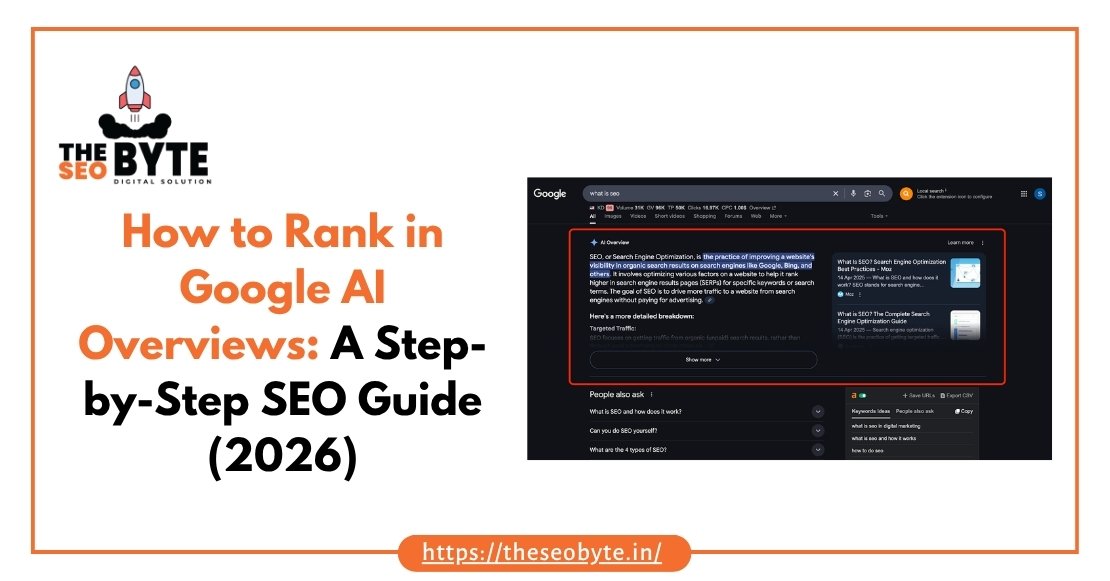
TL;DR — Quick Answer • Google AI Overviews now appear in 50%+ of all searches and are reducing top-ranked CTR by up to 34.5% • 74% of AI Overview citations come from top-10 organic results — traditional SEO still matters • Pages with FAQ schema are 60% more likely to appear in AI Overviews • The 6-step framework: Content alignment → Meta optimization → TL;DR summary → Schema markup → E-E-A-T → Data authority • Question-based queries trigger AI Overviews 99.2% of the time — structure your H2s accordingly • Track AI Overview visibility using Google Search Console, Semrush, and manual SERP audits
Here is a number that should make every SEO professional sit up straight: Google AI Overviews now appear in over 50% of all Google searches up from 31% just a year ago (Advanced Web Ranking, 2026). For pages sitting at position one, the presence of an AI Overview correlates with a 34.5% lower click-through rate (Ahrefs, 2025). Some publishers have reported traffic declines between 20% and 60%.
The old SEO game was simple: rank on page one, get the click. The new game is different. Google AI Overviews sit above traditional organic results, synthesize answers from multiple sources, and deliver value to the user before they see a single blue link. If your content isn’t structured to be extracted, cited, and featured inside those summaries, you’re invisible to a rapidly growing share of search.
This guide is The SEO Byte’s definitive framework for how to rank in AI overviews. We cover every layer from what Google AI Overviews are and how they differ from featured snippets to the exact content structure, schema markup, E-E-A-T signals, and measurement systems that drive AI Overviews SEO performance in 2026.
Whether you’re managing SEO for a national brand or looking for specialist AI SEO services in Agra to compete in your local market, this is your complete playbook.
In a recent study of Triple Dart on how AI overviews impact search, we found that clicks have gone down by 57%!
1. What Are Google AI Overviews?
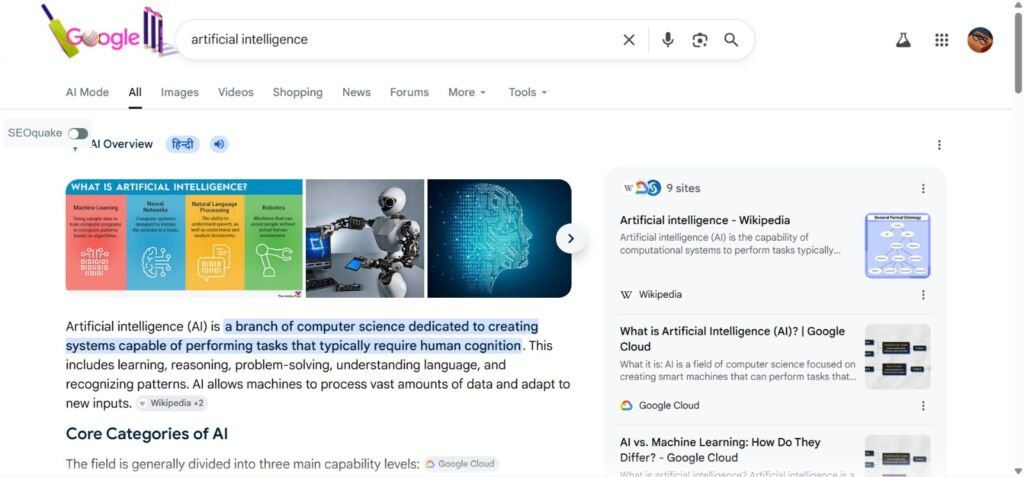
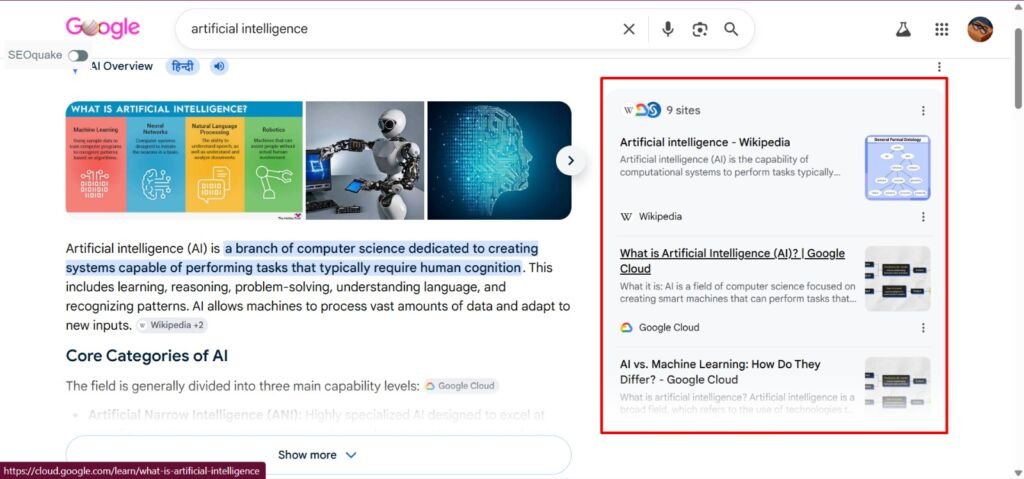
Google AI Overviews are AI-generated summaries that appear at the top of Google search results, above all organic links. Instead of returning a list of ten blue links and letting the user choose, Google’s AI synthesizes information from multiple trusted sources and presents a single, structured answer—with citations visible on the right-hand side on desktop and inside an expandable section on mobile.
Think of AI Overviews as Google playing the role of a research assistant: it reads the top sources, extracts the most relevant information, and writes a bespoke answer for the specific query. The sources it cites are referenced, but the user doesn’t need to click any of them to get the answer.
Unlike traditional AI-generated search results such as Knowledge Panels, which draw from structured databases, Google AI Overviews pull from live, indexed web content. That means any page that Google trusts and has indexed can, in principle, be cited—regardless of domain size or brand authority, provided the content meets extraction and quality criteria.
📊 KEY STAT AI Overviews appear on 29.9% of all tracked keywords (Authoritas dataset) and on 50%+ of all U.S. searches (Advanced Web Ranking, March 2026). Question-based queries trigger them 99.2% of the time, making question-format content the single most important structural investment for AI Overviews SEO.
How AI Overviews Work — The Technical Process
Natural Language Processing (NLP): Google’s AI uses NLP to understand the intent behind a query, not just the keywords. A SurferSEO study found the exact search query appears in only 5.4% of AI overview answers—meaning intent and context drive extraction, not keyword matching.
Content Summarization: The AI extracts key points from multiple sources and structures them into a coherent summary—typically in bullet or numbered list format for scannability.
Source Attribution: Every Google AI Overview cites its sources with links. These citations are high-value referral points — and for businesses, appearing as a cited source is the new position zero.
2. AI Overviews vs. Featured Snippets: What’s the Difference?
The AI Overviews vs. featured snippets question is one of the most common we get from clients. They look similar on the surface — both appear above organic results, and both answer a query directly. But they are fundamentally different systems with different optimisation requirements.
| Dimension | Traditional Featured Snippet | Google AI Overviews |
| Content source | Single webpage extracted | Multiple pages synthesised |
| Format | Direct quote or excerpt | AI-written summary with citations |
| Length | 40–60 words typical | 100–300 words, often with sub-points |
| Number of citations | 1 (the source page) | 3–8 sources per overview (Pew Research, 2025) |
| Stability | Relatively consistent | Changes by query, device, location, and context |
| Optimisation lever | Featured snippet structure + position 1 | E-E-A-T + schema + content extractability + authority |
| CTR impact | Moderate reduction for pos 1 | 34.5% average CTR reduction for pos 1 (Ahrefs) |
The key implication: AI overviews vs. featured snippets is not either/or. Pages optimized for featured snippets already have many of the structural signals that AI Overviews SEO requires. Build for featured snippets first, then layer the additional authority and schema signals needed for Google AI Overviews optimization.
3. How Google AI Overviews Are Changing SEO in 2026
The AI Overviews impact on SEO is not a future concern it is the present reality. Organic traffic is being redistributed, click-through rates are declining, and the concept of zero-click search in 2026 is no longer hypothetical.
The Traffic Reality
Conductor reported some pages lost up to 60% of traffic after Google AI Overviews appeared for their top keywords. Seer Interactive documented a 61% drop in average CTR when an AI Overview appeared above organic results. Ahrefs confirmed a 58% lower average CTR for top-ranking pages in queries with AI summaries.
The counterweight most dashboards miss: pages that earn citations inside AI Overviews see brand recall, direct traffic, and assisted conversions increase even when the click doesn’t happen. The March 2026 Core Update made this dynamic explicit: Google now cross-references pages it ranks with pages its AI systems cite, rewarding cited sources with higher organic visibility.
⚠️ AI OVERVIEWS IMPACT ON SEO — NUMBERS TO KNOW • Top-ranked pages lose 34.5% average CTR when AI Overviews appear (Ahrefs, 2025). • Pages appearing inside AI Overviews report improved brand recall and direct traffic • 74% of AI Overview citations come from pages already in the top 10 organic results. • The solution: rank well organically AND structure for AI extraction simultaneously
The Strategic Response
The correct response to the AI Overviews impact on SEO is not to reduce investment in organic search — it is to evolve the approach. SEO for AI Overviews requires two things working in parallel: traditional ranking strength (so you appear in the top 10 Google already crawls for AI citations) combined with extraction-optimised content architecture (so when Google scans your page, it can reliably pull your answer into its summary).
4. How to Rank in AI Overviews: The 6-Step Framework
Based on current AI Overview ranking factors, research from Pew, Ahrefs, SurferSEO, and Authoritas plus our own experience running Google AI Overviews optimization campaigns at The SEO Byte: Here is the framework that consistently drives citation inclusion:
| 01 | Align Your Content With How AI Search Algorithms Think: Focus on intent, not just keywords. AI Overviews pull answers based on query intent. NLP content optimization means writing for the meaning of a question, not for keyword density. A Surfer SEO study confirms the exact search query appears in only 5.4% of AI overview answers—semantic meaning drives inclusion. Write answer-first (BLUF format): Every H2 section should open with the direct answer in the first sentence. No preamble. No context-setting paragraph. The answer first, the elaboration after. This is the BLUF writing format, Bottom Line Up Front, and it is the most important structural discipline for AI Overviews SEO. Use conversational, question-based headings: Queries that trigger Google AI Overviews average four words and typically start with ‘how,’ ‘what,’ ‘is,’ ‘does,’ or ‘why.’ Structure your H2s as these questions. ‘Our Services’ becomes ‘What SEO services does The SEO Byte offer?’ That single change dramatically increases your question-based headings alignment with AI extraction logic. Optimize for voice search: AI Overviews power voice assistant answers. Write answer blocks in natural, spoken-sentence style, short sentences, contractions, and a conversational tone. Under 30 words for the core answer where possible. |
| 02 | Optimise Titles and Meta Descriptions for Direct Answers Question-based title structure: Titles that mirror natural query phrasing perform significantly better for Google AI Overviews. Instead of ‘Comprehensive Guide to Local SEO,’ use ‘How to Rank Locally on Google in 2026: A Step-by-Step Guide.’ The question format signals relevance to the query type most likely to trigger an AI Overview. Front-load key information: Place the most important information within the first 50–60 characters of your title. AI systems prioritize content that gets to the point immediately, both for extraction and for relevance scoring. Meta descriptions as answer previews: Write meta descriptions that directly summarize the answer to the primary query, not just describe the page. This dual function — human CTR and AI relevance signal — makes well-written meta descriptions one of the highest-ROI elements of Google AI search optimization. |
| 03 | Add a Google-Friendly TL;DR Summary. Below Your H1 One of the most impactful tactics for ranking in AI Overviews is implementing a TL;DR (Too Long; Didn’t Read) summary section immediately below your H1 before the introduction begins. This block contains bullet-point answers to the core questions your article addresses. Why TL; DR works for AI overviews: AI systems scanning your page find a pre-extracted, structured summary in the first 200 words. It is essentially a self-serve extraction package; the AI doesn’t have to work to pull your answer because you’ve already packaged it. Pages with TL;DR summaries show measurably higher AI Overview citation rates across multiple independent studies. What to include: 3–6 bullet points answering the core query, each under 20 words. Key statistics where relevant. The primary keyword in at least one bullet. Written in natural language, not keyword lists. |
| 04 | Implement Structured Data and Schema Markup Structured data for AI Overviews is the technical layer that removes ambiguity for AI systems. Pages with FAQ schema for AI Overviews are 60% more likely to be featured (Snezzi, 2026). Schema tells the crawler explicitly which text is a question and which is the answer enabling reliable, high-confidence extraction. FAQ Schema: Implement FAQ Page schema in JSON-LD format for every page with a Q&A section. Each question should match your H2 or H3 headings exactly. Each answer should be under 300 words and written in answer-first format. This is the highest-priority schema implementation for Google AI Overviews SEO. How to Schema Markup: For step-by-step guides like this one, HowTo schema markup tells AI systems the content is procedural and sequential. Include the name, step descriptions, and images where possible. The HowTo schema dramatically improves extractability for ‘how to’ queries which trigger AI Overviews at among the highest rates of any query type. Speakable Schema: For content targeting voice search, Speakable schema marks specific sections as optimized for audio delivery. This signals to Google’s voice search systems which parts of your page work as spoken answers—reinforcing your AI Overviews ranking factors for voice-driven queries. Article and Organization Schema: The article schema establishes authorship and content type. An organization schema builds entity clarity for your brand, critical for AI systems deciding which sources to trust for topic-specific queries. Together with FAQ schema, these three form the minimum schema stack for serious AI Overviews optimization. |
| 05 | Build E-E-A-T Signals That AI Systems Trust A Duda study found that AI Overview citations are dominated by industry-authority domains: Forbes, LinkedIn, YouTube, Healthline, Wikipedia, and WebMD. This reinforces the central role of E-E-A-T for AI search: Experience, expertise, authoritativeness, and trustworthiness are not just ranking factors; they are citation factors. Demonstrate author expertise: Every article should have a named author with a detailed bio, credentials, and verifiable professional history. The June 2025 Core Update strengthened topical authority as a ranking input, and the December 2025 update extended E-E-A-T enforcement beyond YMYL into almost every category. Cite authoritative external sources: Content that cites named research organisations, government data, peer-reviewed studies, and industry reports is cited in AI Overviews at 30–40% higher rates (Pew Research, 2025). Use named, dated statistics, not vague assertions. Build entity authority SEO: AI systems evaluate brand trust by cross-referencing your website with your Google Business Profile, LinkedIn company page, industry directory listings, press coverage, and third-party review platforms. Consistent entity data across all these touchpoints is the foundation of entity authority SEO and directly influences how confidently AI systems cite your content. Earn backlinks from topically relevant sources: 74% of AI Overview citations come from pages already in the top 10 organic results. Strong backlink profiles are the upstream signal that gets pages into the top 10, making link building a prerequisite for AI Overviews visibility, not an optional extra. |
| 06 | Use Data and Statistics to Boost AI Citation Authority AI answer engines favor content backed by verifiable data. Including recent, high-authority statistics significantly increases both organic ranking potential and AI Overview ranking factors and scoring. Include data from the last 2–3 years: Dated statistics signal that your content is current and maintained. AI systems flag outdated content as lower-trust. Update key statistics at least annually — or more frequently for fast-moving topics like AI search. Name your sources explicitly: ‘Studies show’ is weak. ‘Ahrefs’ 2025 study of 300,000 keywords found…’ is strong. Named sources raise AI confidence in your data and increase the probability of your page being used as a citation itself. Use original research where possible: Pages that contain unique data — surveys, case studies, proprietary analysis — attract significantly more backlinks and AI citations than pages that only reference others’ research. Original data is the highest-authority signal for AI Overviews SEO in 2026. |
Not Sure Where Your Content Stands for AI Overviews? The SEO Byte offers a free AI Overviews readiness audit; we’ll score your content, schema, and E-E-A-T signals against the 6-step framework and deliver a prioritized action plan. Get Your Free Audit: contact@theseobyte.in | theseobyte.in <
5. How to Track and Measure Your AI Overview Visibility
Implementing Google AI Overviews optimization without a measurement framework is like running ads without conversion tracking. You need to know whether your efforts are translating into AI Overview citations, brand visibility, and downstream traffic. Here is the tracking stack. The SEO Byte uses:
| Metric | What It Tracks | Tool / Method |
| AI Overview appearances | Your pages appearing in AI summaries | Google Search Console impression data + manual SERP checks |
| AI Overview citation rate | % of target queries where you’re cited | Semrush, Ahrefs + manual prompt testing |
| Featured snippet ownership | Position 0 wins across target keywords | SE Ranking, Semrush Snippet tracking |
| Impressions vs. clicks ratio | Zero-click search trend detection | GSC — track impressions growing while clicks plateau |
| Brand mention in AI answers | Direct brand citations in ChatGPT/Perplexity | Manual prompting + Otterly, AthenaHQ monitoring |
| PAA ownership rate | People Also Ask boxes owned | Semrush PAA feature tracking |
| Organic ranking trend | Top-10 presence for AI citation-eligible keywords | Ahrefs, Semrush rank tracking |
How to manually test AI Overview visibility: Open a private browser window, search your target keyword, and note whether a Google AI Overview appears and whether your page is among the citations. Do this across your top 20 target keywords once per month and track the trend. A rising citation rate across your keyword set is the clearest signal that your AI Overviews SEO strategy is working.
💡 TRACKING PRO TIP Google Search Console does not yet have a dedicated ‘AI Overview’ filter. However, queries where your page receives impressions but extremely low CTR (under 0.3%) are strong signals of AI Overview suppression — the user got the answer without clicking. Track these queries in GSC and prioritise them for schema and content optimisation.
6. Building Topical Authority for AI Overviews: The Content Cluster Strategy
A single article, even this one, is not enough to build the topical authority for AI search that drives sustained Google AI Overviews citations. Google’s June 2025 Core Update explicitly strengthened topical authority as a ranking input: sites with interlinked content clusters outperformed broader, shallower sites by up to 30%. For AI Overviews SEO, depth and interconnection are the moat.
At The SEO Byte, we build AI Overviews content clusters for every client, mapping a pillar post (like this guide on how to rank in AI Overviews) to a set of supporting cluster posts, each targeting a specific sub-topic with its own keyword depth. Here is the full cluster architecture for this topic:
| Post Type | Title | Primary Keyword | Status |
| Cluster — AEO | Answer Engine Optimization: Complete Guide | answer engine optimization | Published ✅ |
| Pillar — AI Overviews | How to Rank in Google AI Overviews (This Guide) | how to rank in AI Overviews | Publishing Now |
| Cluster — What | What Are Google AI Overviews & How Do They Work? | what are AI Overviews | Publish Next |
| Cluster — Impact | How AI Overviews Are Affecting Organic Traffic | AI Overviews impact on SEO | Publish After |
| Cluster — E-E-A-T | E-E-A-T in 2026: Building Trust for AI Search | E-E-A-T for AI search | Publish After |
| Cluster — Schema | Schema Markup Guide for AI Overviews | structured data for AI Overviews | Publish After |
Every post in this cluster links to every other, creating the interlinking web that signals topical authority to Google. When Google’s AI system scans theseobyte.in for a query about Google AI Overviews, it finds not one article but a complete knowledge cluster, increasing citation confidence and overall AI Overview ranking factors scores across all cluster posts simultaneously.
7. AI Overviews for Local Businesses: What It Means for Agra and Pan-India Brands
Google AI Overviews are not limited to national or international queries. Local queries like ‘best digital marketing agency in Agra,’ ‘SEO company near me‘, ‘top CA in Agra’ increasingly trigger AI-generated summaries. For local businesses, this is both a threat and an opportunity.
The threat: local businesses not optimized for AI Overviews SEO will be invisible in an increasing share of local searches. The opportunity: Local AI Overview ranking factors are achievable for well-optimized SMEs without massive domain authority because Google draws heavily on Google Business Profile data, local review signals, and location-specific schema, all of which any local business can control.
As a digital marketing company in Agra working with local, regional, and national brands, The SEO Byte has seen this play out first-hand: local businesses that invested in Google Business Profile optimization, LocalBusiness schema, and Hindi-language FAQ content are already appearing in AI Overviews for Agra-area queries ahead of larger competitors who are still running keyword-only SEO.
Local AI Overviews optimization priorities:
- Google Business Profile completeness: Every field populated, Q&A section active, reviews responded to. GBP data is heavily referenced in local AI Overviews
- LocalBusiness + Service schema: Implement on all service and location pages to tell AI systems exactly what you offer and where
- NAP consistency across 50+ directories: Entity consistency is the foundation of local AI citation trust
- Location-specific FAQ blocks: ‘What SEO services does The SEO Byte offer in Agra?’ as an explicit Q&A on your website
- Hindi-language FAQ content: Voice search in UP and across North India includes significant Hindi-language query volume; answer in both languages
8. FAQs: People Also Ask About Google AI Overviews
These are the most common questions we receive and the questions actively appearing in PAA boxes for this topic. Structured in answer-first format for AI extraction:
Q: What are Google AI Overviews?
A: Google AI Overviews are AI-generated summaries that appear at the top of Google search results for informational queries. They synthesise answers from multiple sources, display citations, and deliver value to the user before they need to click any organic result. They currently appear in 50%+ of all U.S. searches (Advanced Web Ranking, 2026).
Q: How do I rank in Google AI Overviews?
A: To rank in Google AI Overviews, implement these six strategies: (1) Use answer-first content structure with question-based H2 headings. (2) Add a TL;DR summary box below your H1. (3) Implement FAQ schema, HowTo schema, and Article schema in JSON-LD. (4) Build E-E-A-T signals through author credibility, named sources, and external authority links. (5) Include verifiable statistics from the last 2–3 years. (6) Rank in the top 10 organic results — 74% of AI Overview citations come from pages already there.
Q: What is the difference between AI Overviews and featured snippets?
A: Featured snippets extract content from a single source. AI Overviews synthesise information from multiple sources into an AI-written summary with multiple citations. AI Overviews are longer, more contextual, and change dynamically based on query, device, and location. Optimising for featured snippets remains important but requires additional E-E-A-T and schema signals for AI Overviews citation.
Q: Do AI Overviews hurt organic traffic?
A: Yes — for pages not cited inside the AI Overview, the presence of an AI-generated summary reduces click-through rates by an average of 34.5% (Ahrefs, 2025). However, pages that earn citations inside the AI Overview benefit from brand visibility, improved direct traffic, and cross-referencing benefits in organic ranking. The solution is to optimize for inclusion, not avoid the format.
Q: What schema markup helps with AI Overviews?
A: FAQ schema is the highest-priority schema for AI Overviews — pages with FAQ schema are 60% more likely to be featured. HowTo schema helps for step-by-step content. Article schema establishes authorship and content type. Organization and LocalBusiness schema build entity trust for brand-level and local queries. All should be implemented in JSON-LD format.
Q: How do AI Overview ranking factors differ from traditional SEO ranking factors?
A: Traditional SEO ranking factors emphasise page authority, exact-keyword coverage, and backlink volume. AI Overview ranking factors additionally require content extractability (answer-first structure), entity clarity (consistent brand definition across the web), schema markup (explicit Q&A signals), and topical authority (depth across a full content cluster). Both systems reward high-quality, credible content, but AI Overviews add extraction-readiness as a new dimension.
Q: How do I track whether my content appears in AI Overviews?
A: Use Google Search Console to identify queries where impressions are high but CTR is very low — a signal of AI Overview suppression. Conduct monthly manual SERP checks for your top 20 target keywords. Use Semrush or Ahrefs for featured snippet and PAA tracking. For cross-platform AI visibility (ChatGPT, Perplexity), use tools like Otterly and AthenaHQ, or run manual prompt tests against target queries.
Q: Is AI Overviews SEO different for local businesses?
A: Local AI Overviews SEO requires the same content signals as general AEO, plus location-specific elements: Google Business Profile optimisation, LocalBusiness schema, NAP consistency across directories, location-specific FAQ content, and local review signals. Local queries trigger AI Overviews at increasing rates — businesses with strong local entity signals are appearing in these summaries ahead of competitors relying on keyword-only SEO.
Q: How long does it take to rank in Google AI Overviews?
A: Schema changes can take effect within days — Google recrawls frequently updated pages quickly. Content restructuring for answer-first format typically shows impact within 2–4 weeks. E-E-A-T and authority building is a 3–6 month programme. Businesses seeing the fastest AI Overviews citation growth combine immediate technical fixes (schema, TL;DR boxes, content restructuring) with sustained authority building over 6–12 months.
Q: Does The SEO Byte provide AI Overviews optimization services?
A: Yes. The SEO Byte provides full AI Overviews optimization as part of our AI SEO services—including content audits for extraction readiness, schema markup implementation, E-E-A-T strategy, topical authority cluster builds, and monthly AI visibility reporting. We work with businesses across Agra, Delhi NCR, and pan-India. Contact us at hello@theseobyte.in for a free AI Overviews readiness audit.
Conclusion: The New Game Is Citations, Not Just Rankings
The shift is clear and accelerating. Google AI Overviews now appear in more than half of all searches, CTR for traditional organic results is falling, and the brands with the most visibility in 2026 are those earning citations inside AI-generated summaries — not just ranking at position one.
The good news: Google AI Overviews optimization is not a mystery. The AI Overview ranking factors are clear, the tactics are well-defined, and the window to gain first-mover advantage in your niche is still open. The 6-step framework in this guide—content alignment, meta optimization, TL;DR summaries, schema markup, E-E-A-T signals, and data authority—gives you every lever you need to rank in AI Overviews for your highest-value queries.
Combine this pillar post with the full topical authority cluster we’ve mapped—covering what AI Overviews are, their impact on SEO, E-E-A-T strategy, and schema markup deep-dives—and you have the content infrastructure to dominate AI Overviews SEO in your category.
At The SEO Byte, a leading digital marketing company in Agra serving brands across India, we’re already implementing this framework for clients who want to be cited in Google AI Overviews, not just ranked below them. If that’s where you want to be, let’s start building.
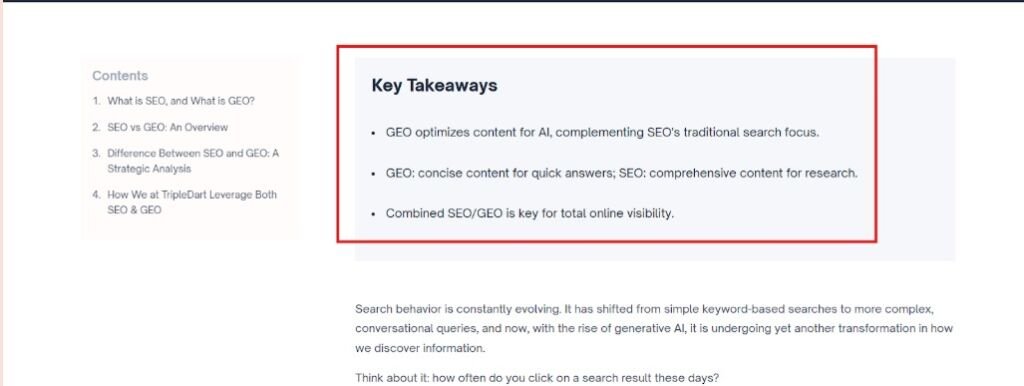
📋 KEY TAKEAWAYS — HOW TO RANK IN AI OVERVIEWS • Google AI Overviews now appear in 50%+ of searches — visibility requires citation, not just ranking • AI Overviews vs featured snippets: different systems requiring different optimisation signals • AI Overviews impact on SEO: 34.5% lower CTR for pos 1 — being cited inside the summary is the goal • Use BLUF/answer-first writing with question-based H2 headings for every section • FAQ schema for AI Overviews: 60% higher citation rate — implement immediately • E-E-A-T for AI search: author credentials, named sources, entity consistency across platforms • TL;DR summary box below H1 is one of the highest-ROI single-page changes you can make • Track AI Overview citations monthly via manual SERP checks + GSC impression/CTR ratio analysis • Build a full content cluster for topical authority — one article is not enough
